
Digital interaction has long been dominated by screens and speakers. By 2026, this paradigm is shifting dramatically with the rise of the Sensory Internet — an evolution that brings touch, smell, and taste into the digital world. What was once speculative fiction is now a fast-developing field powered by advances in haptics, neuroscience, biosensors, and immersive computing. This shift is not just about better gadgets; it is about transforming the very nature of human–technology interaction.
Product managers & founders designing next-generation consumer apps and platforms.
Healthcare & education leaders seeking deeper engagement and therapeutic tools.
Marketers & retailers who want to connect with customers on an emotional level.
- The Sensory Internet adds touch, smell, and taste to digital experiences.
- It is already shaping industries from retail and healthcare to fitness, entertainment, and dating.
- Companies must see sensory integration not as novelty but as a strategic driver of engagement and trust.
Expanding the Digital Experience
The Sensory Internet is designed to make digital engagement as rich as physical reality. Haptic wearables simulate textures, pressure, and temperature. Olfactory devices can replicate fragrances for online shopping or immersive tourism. Experimental gustatory interfaces recreate flavors using electrochemical triggers, giving users a “taste demo” before committing to a meal or product.
Industries from healthcare to entertainment are already testing applications: hospitals using smell therapy for memory treatment, retailers offering touch-based previews of fabrics, and streaming services experimenting with films enhanced by synchronized scents.
The Metaverse Connection
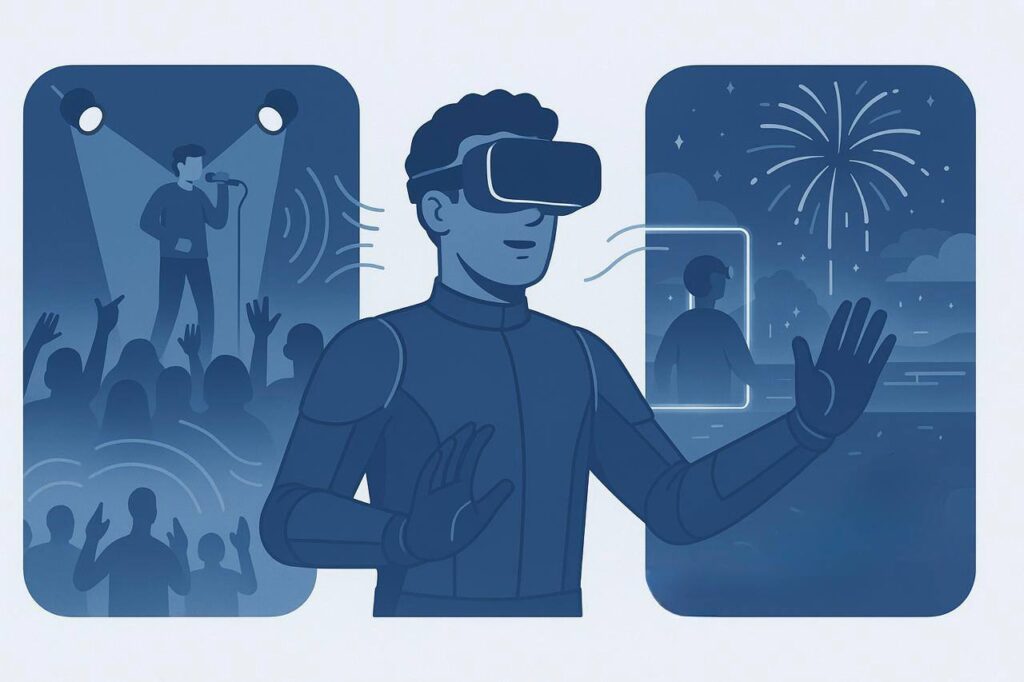
The much-hyped metaverse has often been criticized for failing to deliver beyond 3D visuals and social avatars. The Sensory Internet could be the missing link that turns it into something genuinely immersive. Imagine attending a virtual concert where you not only hear the music and see the crowd but also feel the bass vibration through your haptic suit and smell the smoke from digital fireworks.
For businesses, this opens a new era of immersive commerce. Virtual stores won’t just look real — they will feel and smell real. A sports brand might let users try on digital sneakers and sense the texture before buying both the digital and physical versions. The boundary between virtual and physical economies could all but disappear.
Marketing and Brand Experiences
Advertising has always relied on sensory triggers — the smell of fresh bread, the taste of a sample, the touch of premium packaging. The Sensory Internet allows brands to deliver these experiences digitally.
Picture an online coffee campaign where users can smell roasted beans while scrolling Instagram, or a perfume brand that lets shoppers “test” fragrances remotely before purchase. Restaurants might provide digital tasting menus that stimulate flavors virtually, allowing customers to “try” before they order delivery.
This reinvention of marketing could create deeper emotional bonds between consumers and brands, while also sparking new debates around ethics and manipulation — how far should companies go in simulating desire through sensory cues?
The next wave of computing is not just intelligent, it’s immersive. We are moving from processing information to experiencing it.
Jensen Huang, CEO of NVIDIA
Applications Across Industries
- Healthcare
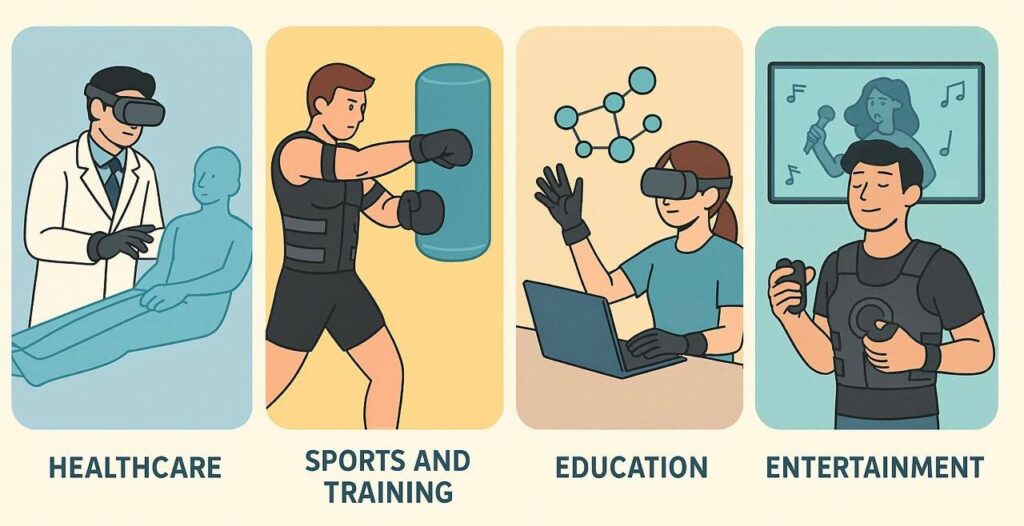
In healthcare, the sensory internet opens possibilities far beyond telemedicine. Doctors can perform remote diagnostics with precision thanks to real-time haptic feedback. Surgeons operating robotic arms feel resistance and textures as if they were physically present, reducing risk and improving outcomes. Patients benefit from continuous monitoring, where smart wearables transmit sensory data instantly to healthcare providers, enabling early detection of critical conditions. - Sports & Training
Athletes and trainers gain a powerful tool for performance improvement. With immersive VR/AR enhanced by touch and motion feedback, training sessions simulate real competition environments. Footballers can feel the pressure of the ball in VR, gymnasts practice balance with realistic resistance, and fighters spar in digital arenas with lifelike intensity. Beyond elite sports, everyday fitness programs use haptic wearables to correct posture, prevent injuries, and personalize routines.
- Education
Education enters a new era where distance no longer limits hands-on experience. Students in STEM fields can “feel” the resistance of mechanical parts in engineering, the vibrations of molecules in chemistry, or the flow of electricity in physics — all through connected devices. Virtual classrooms bring laboratory-level experiences to learners worldwide, democratizing access to high-quality training. This tactile learning deepens understanding and retention, bridging the gap between theory and practice. - Entertainment
The entertainment industry transforms into a multi-sensory experience. Gamers immerse themselves in worlds where every explosion, impact, or texture is felt in real time. Virtual concerts allow audiences not only to hear music but to feel bass vibrations and atmosphere as if they were in the venue. Movies and AR/VR storytelling deliver richer emotional engagement, blending physical sensations with digital narratives to create unforgettable experiences.
Challenges and Risks
The hype is real, but so are the obstacles. Scaling smell and taste technology safely remains difficult, and the absence of universal standards means compatibility issues across devices. Health risks of prolonged exposure to artificial sensory stimulation are not yet fully understood. Privacy adds another layer of complexity: sensory reactions are deeply personal data that could be exploited for hyper-targeted advertising.
Cost is also a barrier. Early adopters will likely be luxury industries — high-end fashion, gourmet food, and travel — before hardware prices drop enough for mass adoption.
Market Outlook
According to PwC, the global immersive technology market, which includes AR, VR, haptics, and sensory internet solutions, is projected to surpass $120 billion by 2027, with double-digit annual growth rates. This expansion is driven not just by entertainment and gaming but by enterprise adoption in healthcare, education, logistics, and industrial design.
Gartner forecasts that by 2030, at least 15% of all consumer digital interactions will involve some form of haptic or tactile feedback. This suggests that sensory internet is not a niche add-on but a core layer of the digital economy, much like cloud computing or mobile applications were a decade earlier.
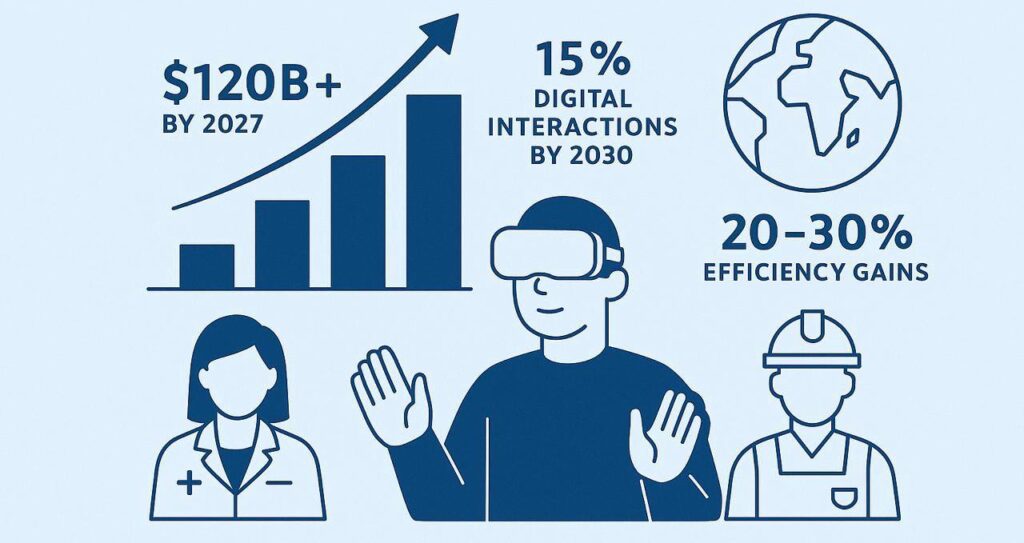
McKinsey further predicts that companies embracing multisensory technologies could unlock 20–30% efficiency gains in fields like remote training, telemedicine, and manufacturing by reducing miscommunication and improving real-time decision-making. The market momentum clearly shows that sensory internet is no longer futuristic speculation — it is becoming a strategic foundation for digital ecosystems.
The Road Ahead
The development of the Sensory Internet will likely follow phases. Touch will dominate the early wave through haptic devices in gaming and e-commerce. Smell will integrate into retail and entertainment. Taste — the most complex — will gradually emerge in healthcare, gastronomy, and digital lifestyle products.
By the mid-2030s, seamless multi-sensory experiences could become mainstream, supported by AI-driven orchestration, multi-cloud platforms, and real-time edge computing. The internet may no longer be something we just “use” but something we fully inhabit with all our senses.
Conclusion
The Sensory Internet marks a cultural, technological, and economic leap. It will redefine industries, reshape marketing, and create new standards for digital engagement. Like the smartphone and social media revolutions of previous decades, sensory computing has the potential to become the defining innovation of the 2030s.
The companies that embrace it early will hold a decisive competitive edge. The internet of the future will not just be watched and heard — it will be touched, smelled, and tasted. A digital world where presence feels real.
Why Ficus Technologies?
At Ficus Technologies, we help businesses move from curiosity to implementation in the sensory era.
Our expertise includes:
- Haptic & immersive integration for retail, fitness, and entertainment platforms.
- AI-powered personalization to adapt sensory input to each user.
- Secure architectures that protect sensitive sensory data and ensure compliance.
- Prototyping & scaling — from PoC to enterprise-grade rollout.
We don’t just follow trends. We build ecosystems where sensory innovation becomes business value.
It goes beyond visuals and sound by adding touch, vibrations, and even smell, creating a truly immersive digital experience.
Healthcare (remote surgery, rehabilitation), education (virtual labs), sports (haptic training suits), and entertainment (VR concerts, gaming).
Analysts project over $120B market value by 2027 (PwC), and 15% of digital interactions will involve haptics by 2030 (Gartner).
Companies can achieve 20–30% efficiency gains in training, telemedicine, and manufacturing through better communication and decision-making (McKinsey).
Yes — as costs decrease, these technologies will move from enterprise and healthcare into everyday consumer experiences, just like smartphones and VR did.






 Success...!