
By 2026, data has become one of the most regulated and politically sensitive assets global companies manage. Cloud platforms make it technically easy to store and process data anywhere in the world, but regulatory reality moves in the opposite direction. Governments increasingly demand that data about their citizens, businesses, and critical infrastructure remains under local control. As a result, data sovereignty is no longer a legal edge case — it is a core architectural and strategic concern for global organizations.
For many companies, data sovereignty becomes visible only when something breaks: a regulator raises concerns, a market expansion stalls, or a cloud architecture proves incompatible with local requirements. At that point, fixing the problem is expensive and disruptive. In 2026, successful global companies treat data sovereignty not as a compliance constraint, but as a design principle embedded into how systems are built and operated.
It is especially relevant for companies operating across jurisdictions with strict data localization, privacy, or residency requirements, and for teams designing cloud architectures intended to scale internationally.
- Data sovereignty is about control, not just location. Local data requirements affect architecture, operations, and vendor strategy.
- What works in 2026 is designing for sovereignty from the start, using modular systems and region-aware platforms.
- What fails is retrofitting compliance after global expansion or relying on provider assurances without architectural ownership.
What Data Sovereignty Really Means in 2026
In 2026, data sovereignty goes far beyond the question of where data is stored. It includes who can access it, under which legal jurisdiction it falls, how it can be transferred, and which laws apply when conflicts arise. A dataset stored in one country but managed by a foreign provider, accessed by global teams, or processed across regions may still violate sovereignty requirements.
Modern data sovereignty is about enforceable control. Organizations must be able to prove that data handling complies with local laws — consistently and continuously — not just at the moment of deployment. This requires architectural decisions that align legal boundaries with technical boundaries.
Companies that succeed do not rely on legal interpretations alone. They translate regulatory requirements directly into system design.

Why Global Architectures Break Under Local Rules
Many global cloud architectures are designed around efficiency and scale rather than jurisdictional boundaries. Centralized data lakes, global analytics pipelines, and shared services reduce duplication and simplify operations. At scale, this approach can lower infrastructure and operational costs by 20–30% compared to fully regionalized setups. However, these gains assume unrestricted data movement — an assumption that no longer holds.
Regulatory reality has shifted rapidly. Today, over 70% of countries enforce some form of data localization, residency, or sovereignty requirement, and a growing share of new regulations apply not only to storage, but also to processing and access. For global organizations, this creates a widening gap between architectural intent and legal constraints.
The cost of addressing this gap late is significant. When data sovereignty requirements emerge after platforms are already deployed, organizations are forced into reactive solutions: duplicating analytics stacks, creating region-specific data lakes, or introducing manual approval and masking layers. These retrofits often increase regional operating costs by 25–40%, driven by duplicated infrastructure, additional compliance tooling, and fragmented support models.
Data Sovereignty as a Business Risk, Not Just a Legal One
Treating data sovereignty as a legal checkbox creates hidden business risk that extends far beyond compliance. While regulatory exposure is often the most visible concern, the downstream impact is operational, financial, and strategic. When sovereignty considerations surface late, organizations face delays in market entry, stalled partnerships, and erosion of customer trust — costs that are rarely captured in legal risk assessments.
The business impact is measurable. Studies across regulated and semi-regulated industries show that 30–50% of delayed market launches are linked to unresolved data residency or cross-border data transfer constraints. In practice, this means products that are technically ready but cannot be deployed due to unclear data flows, unapproved processing locations, or incompatible vendor architectures. These delays directly affect revenue timelines and competitive positioning.
Partnership risk is another common consequence. As ecosystems grow more interconnected, organizations increasingly rely on third-party platforms, analytics providers, and cloud services. When data handling models are incompatible, partnerships fail at the contracting or integration stage. Large enterprises report that data governance and sovereignty concerns are among the top reasons for failed or prolonged vendor negotiations, particularly in finance, healthcare, and public-sector adjacent markets.
Customer trust introduces an additional layer of risk. By 2026, transparency around data location and control has become a baseline expectation rather than a differentiator. Surveys consistently indicate that a majority of customers are more likely to disengage when data practices are unclear, even in markets with lighter regulation. Reputational damage from perceived misuse or opaque handling of data often translates into measurable churn and reduced lifetime value — impacts that can exceed the cost of formal penalties.
At Ficus Technologies, cloud and data architecture is designed with global scale and local constraints in mind.
Contact usWhat Works in 2026
Successful global companies adopt region-aware architectures. Data residency rules are enforced at the platform level, not through documentation or manual processes. Sensitive data is processed locally, while global systems consume only what is legally and technically allowed.
They separate data domains clearly. Not all data is equal, and not all data requires the same level of locality. By classifying data correctly, organizations avoid over-restricting systems while still meeting regulatory requirements.
Vendor strategy also matters. Companies avoid hard dependency on cloud services that cannot support regional isolation or sovereign deployments. Control over encryption keys, access policies, and auditability is non-negotiable.
Most importantly, sovereignty is owned.
Responsibility does not sit only with legal or compliance teams. Engineering, platform, and security teams are accountable for making sovereignty enforceable in practice.
What Doesn’t Work Anymore
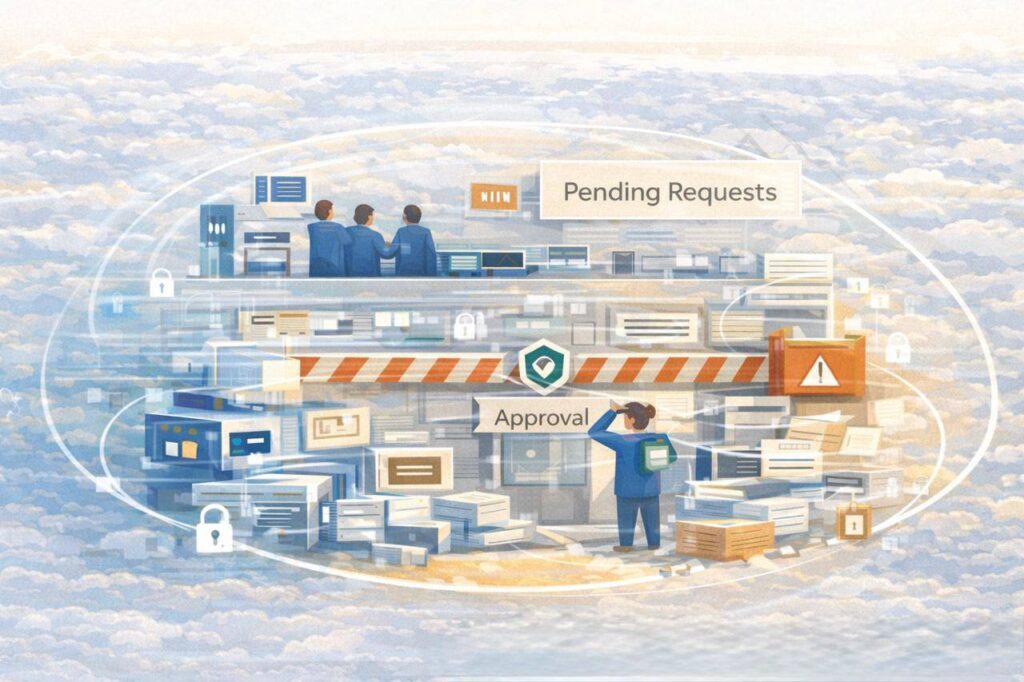
Centralized global data platforms without regional boundaries consistently fail under modern regulations. Manual approval processes and policy documents do not scale and break under operational pressure.
Assuming that cloud providers “handle compliance” is equally risky. Providers offer capabilities, not guarantees. Without architectural intent, organizations remain exposed.
Retrofitting sovereignty after expansion is one of the most expensive patterns in 2026. It increases fragmentation, slows teams down, and creates long-term operational debt.
The Role of Cloud Providers and AI
Cloud providers increasingly offer sovereign regions, local control options, and compliance tooling. These capabilities are valuable, but they do not remove the need for architectural ownership. Organizations must still decide how data flows, where processing happens, and who has access.
AI adds additional pressure. Training models, aggregating datasets, and cross-border inference can easily violate sovereignty if not designed carefully. AI amplifies both value and risk. Without locality-aware data governance, it becomes a liability.
Conclusion
In 2026, data sovereignty is not an obstacle to global growth — it is a condition for it. Companies that treat local data requirements as a first-class design constraint build systems that scale predictably across markets. Those that ignore it face delays, rework, and increasing regulatory exposure.
The real advantage lies with organizations that align legal boundaries, technical architecture, and operational ownership. In a global economy shaped by local rules, control over data is control over the business.
Why Ficus Technologies?
At Ficus Technologies, we help global companies design architectures that respect data sovereignty without sacrificing scale or delivery speed. We work at the intersection of cloud architecture, compliance, and platform engineering to ensure local data requirements are enforced by design — not patched in later.
It is the ability to enforce local control over data — including location, access, and legal jurisdiction — through system design, not just policy.
No. Localization is about where data is stored. Sovereignty includes who controls it, how it is accessed, and which laws apply.
Poorly designed systems do. Well-designed, locality-aware architectures enable faster and safer global expansion.
Ultimately, it is shared responsibility, but engineering and platform teams must make sovereignty enforceable in practice.






 Success...!