
In 2026, artificial intelligence has moved far beyond the scripted chatbots of the past. What used to be reactive tools answering basic questions has evolved into autonomous agents that plan, act, and adapt.
AI is no longer just a utility — it has become a partner in decision-making, productivity, and innovation. From healthcare and finance to retail and education, the human-to-machine relationship is being redefined.
CTOs & Product Owners designing intelligent, user-centered solutions.
Developers & Architects building autonomous AI systems into workflows.
Healthcare, Finance & Education Leaders looking to amplify trust, speed, and impact through AI.
- AI in 2026 has shifted from chatbots to autonomous agents that execute multi-step processes.
- Human-to-machine interactions are becoming relationship-driven, not transactional.
- Trust, accountability, and governance are essential for sustainable adoption.
From Chatbots to Autonomous Agents
The earliest generation of chatbots was little more than rule-based FAQ machines. They could handle predefined questions like “What are your opening hours?” or “Where is my order?” but struggled the moment a query strayed outside the script. These bots were brittle, unable to manage ambiguity, and often left users frustrated when conversations broke down.
Modern autonomous AI agents represent a dramatic leap forward. They don’t simply follow rules — they analyze intent, context, and interaction history to generate dynamic responses. Crucially, they are capable of action: connecting to APIs, orchestrating workflows, integrating with business systems, and engaging with multiple platforms at once.
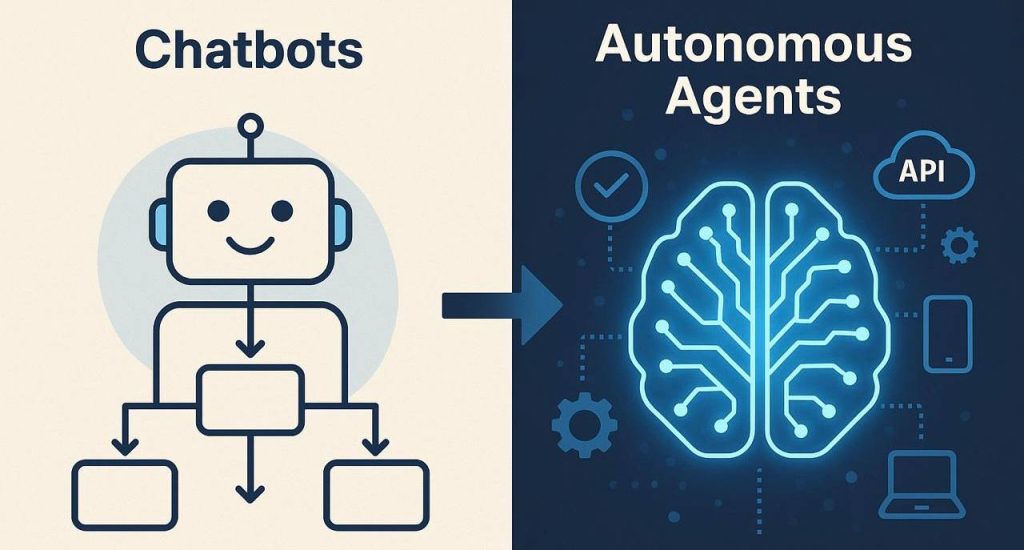
Take customer service as an example. A legacy chatbot might have redirected a user to a help article. An AI agent today verifies account identity, reviews service history, flags suspicious activity, escalates to a human if necessary, and even resolves the ticket autonomously. The paradigm shift is clear: we’ve moved from conversation to execution.
Emotional Intelligence in Digital Systems
What truly powers this transformation is the integration of emotional intelligence into digital systems. Where machines were once cold and mechanical, they can now recognize tone, urgency, sentiment, and behavioral cues.
In healthcare, this means agents that don’t just send reminders but deliver them in a calm, empathetic tone that reduces patient stress. In education, AI tutors adjust their teaching style: offering encouragement and step-by-step support to struggling learners, or accelerating material for those ready to advance. In customer experience, systems now tailor tone, vocabulary, and even pacing to suit individual clients.
This ability to mirror human communication patterns fosters trust. People feel acknowledged rather than processed. Emotional intelligence transforms AI from a transactional tool into a relationship builder, capable of deepening engagement and creating loyalty.
AI as a Teammate
The greatest value of AI today lies in its ability to act as a teammate. In finance, AI reconciles millions of transactions in seconds, detecting anomalies long before human auditors could.
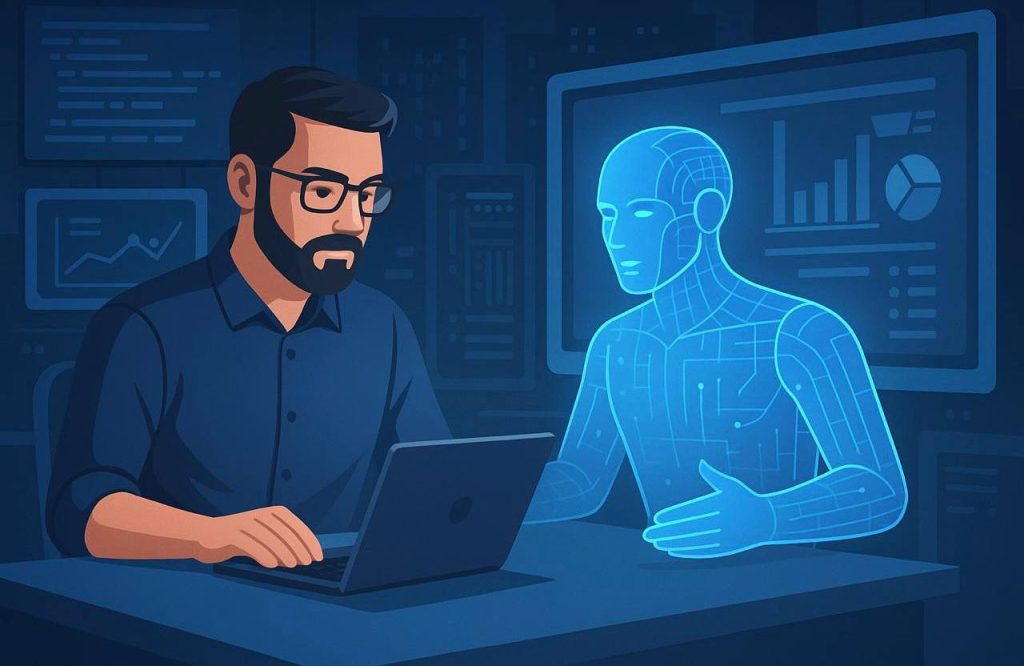
In manufacturing, it predicts machine failures and prevents costly downtime. In product design, AI generates and tests prototypes at speeds that compress months of work into days.
In software engineering, AI reviews codebases, flags vulnerabilities, suggests optimizations, and accelerates migration to scalable architectures. Rather than eliminating human roles, it removes the weight of repetitive, error-prone tasks. Teams become more strategic, more creative, and more focused on solving problems that matter.
Risks and Governance
With autonomy comes responsibility — and risk. AI agents often require access to sensitive data and control over critical systems. That makes governance non-negotiable.
The challenges are clear:
- Reliability: Can the system handle unexpected edge cases?
- Accountability: Who owns the consequences of a machine’s decision?
- Transparency: Can users and regulators understand how outcomes were produced?
Forward-looking organizations address these risks with strict guardrails. Audit logs track every agent action. Human-in-the-loop checkpoints remain mandatory for high-impact decisions. Dashboards provide explainability, allowing leaders to see not only the result but also the reasoning chain behind it. Trust in AI is built through visibility, not blind faith.
Let’s build your next-gen strategy together!
Contact UsAI in Real-World Industries
By 2026, AI is no longer an experimental layer — it has become embedded into the very fabric of industries, transforming how organizations operate, deliver, and grow. Each sector applies AI differently, but the underlying impact is the same: faster decisions, lower risks, and stronger customer trust.
- Retail → Real-time personalization has replaced static campaigns. AI tailors promotions dynamically based on browsing history, weather conditions, or regional demand. Dynamic pricing engines constantly adjust product costs to optimize margins and conversion rates. For global retailers, AI even predicts supply shocks and automatically suggests alternative vendors.
- Logistics → Efficiency is everything in global supply chains. AI optimizes delivery routes minute by minute, balancing speed with fuel efficiency. Autonomous fleets of trucks, drones, and ships are coordinated by intelligent systems that reroute in real time when disruptions (storms, strikes, or delays) occur. Predictive monitoring ensures fewer breakdowns and tighter service-level agreements.
- Healthcare → AI systems now assist doctors in diagnostics by scanning images, lab results, and patient histories faster than teams of specialists. Predictive models identify patients at risk of readmission before symptoms escalate. Hospitals integrate AI-driven scheduling that balances patient needs with staff availability, reducing burnout while improving outcomes. All data is encrypted and tracked for compliance with HIPAA, GDPR, and local healthcare standards.
- Banking → Security and compliance are the pillars. AI fights fraud by scanning millions of transactions per second, flagging anomalies invisible to humans. Robo-advisors automatically rebalance portfolios, while compliance engines track evolving regulations and enforce rules in real time. Customers interact with AI financial assistants that provide personalized advice on savings, lending, and investments.
- Education → The classroom has been reshaped. Adaptive AI tutors design personalized learning journeys for each student, adjusting pace and content to match ability. Real-time analytics track progress, highlight weak areas, and recommend additional resources. Universities deploy AI to optimize curricula, while corporate training platforms use it to keep employees ahead in rapidly evolving industries.
The Future of Human-AI Collaboration
Looking ahead, the trajectory is unmistakable. AI will continue evolving from assistants to collaborators, blurring the line between digital and human contribution. Future agents won’t just respond to commands; they will proactively anticipate needs, propose strategies, and co-create solutions.
In business, this means decision-making augmented by real-time insights and simulations. In society, it means personalized digital companions that adapt to lifestyles, goals, and emotional states. The shift is not about replacing humans but about unlocking new frontiers of collaboration.

The journey from chatbots to autonomous agents is more than a technical evolution — it’s a redefinition of how humans and machines work together. The future belongs to hybrid teams where creativity, empathy, and intelligence are shared between people and their digital counterparts.
Conclusion
AI has moved beyond chatbots and into the role of partner, advisor, and collaborator. It is no longer about simple responses but about building relationships that are adaptive, efficient, and trustworthy. Businesses that combine innovation with governance, empathy with performance, and automation with accountability will lead the next era of digital transformation.
The future of human-to-machine interaction is not about machines working for us — it is about machines working with us.
Why Ficus Technologies?
At Ficus Technologies, we help businesses turn AI from experiments into strategic assets:
- Secure-by-Design Architectures with embedded transparency and compliance.
- Custom Workflows tailored to industries such as finance, healthcare, and education.
- Human-in-the-Loop Systems that balance autonomy with accountability.
- Future-Ready Platforms that scale with evolving technologies and regulations.
We don’t just integrate AI — we transform it into your competitive advantage.
Chatbots answer predefined questions. AI agents execute multi-step workflows and achieve objectives autonomously.
It eliminates repetitive tasks, while humans focus on creativity, strategy, and decision-making.
Trust and accountability. Without governance, AI can make flawed or biased decisions.
Begin with internal workflows, implement human oversight, and expand gradually with measurable impact.





 Success...!