
In 2026, technology and climate are no longer separate conversations. Every digital service we use — from streaming platforms to banking apps — consumes energy, often powered by carbon-intensive grids. The rise of carbon-aware software marks a turning point: developers are no longer optimizing solely for speed and cost but also for environmental impact. Sustainable computing has evolved into a competitive advantage, reshaping how businesses build and scale digital products.
Software Engineers & Architects building next-gen carbon-aware solutions.
Sustainability Leaders seeking measurable ways to reduce IT emissions.
Investors & Policymakers shaping the future of climate-tech innovation.
- Sustainable computing is no longer optional — it’s becoming a business requirement.
- Carbon-aware apps align environmental responsibility with operational efficiency.
- Industries from finance to gaming already prove that green code works.
What Is Carbon-Aware Software?
Carbon-aware software adapts its behavior based on energy conditions. Instead of running every task immediately, it can schedule non-urgent operations during hours when renewable energy is abundant, or route workloads to data centers powered by hydro, wind, or solar grids. It also minimizes unnecessary computational cycles through efficient code and optimized architectures.
In practice, this means a healthcare app running predictive diagnostics may schedule heavy imaging analysis during periods of low-carbon energy. A streaming platform may reduce background video rendering during high-demand peak hours. Carbon-aware software introduces intelligence into operations, making them not only cost-effective but also environmentally conscious.
Why Sustainable Computing Matters
The technology industry already contributes significantly to global emissions. By 2026, businesses are judged not only by how innovative their products are but also by how responsible they are toward the planet. Governments are enforcing stricter emissions reporting, investors prefer climate-positive companies, and customers increasingly demand greener solutions.
Organizations that neglect sustainability risk regulatory fines, reputational damage, and operational inefficiencies. On the other hand, those that embrace carbon-aware practices gain trust, long-term resilience, and a clear competitive edge.
The greenest energy is the energy we never have to use.
Amory Lovins, Physicist & Energy Expert
Building Carbon-Aware Applications
Creating sustainable software requires deliberate decisions at every stage:
- Efficient Code: Developers use optimized algorithms that consume fewer resources while delivering the same results.
- Dynamic Scheduling: Workloads are intelligently delayed or advanced depending on carbon intensity data.
- Cloud Optimization: Multi-cloud setups allow businesses to route processes to greener regions, reducing dependency on fossil-heavy grids.
- Lightweight Interfaces: Mobile and web apps avoid unnecessary animations, oversized files, or heavy background operations, making them energy-efficient without harming usability.
This approach shifts the mindset from “run as fast as possible” to “run as smart as possible.”
Industries Leading the Way
Sustainable computing is not a distant idea — it is already shaping operations across multiple industries. These sectors demonstrate how aligning digital workflows with environmental priorities can drive both profitability and resilience.
Finance
Financial institutions have long been associated with massive data centers that operate 24/7. By 2026, leading banks are optimizing their transaction processing to coincide with peaks in renewable energy availability. Millions of payments, settlements, and trading activities are now routed dynamically to greener energy windows. This not only reduces the carbon footprint of financial systems but also positions banks as leaders in corporate responsibility — a value increasingly demanded by investors and regulators.
Healthcare
Healthcare is one of the most energy-intensive industries, with MRI machines, CT scanners, and AI-driven diagnostics consuming enormous power. Innovative hospitals and research centers are now scheduling these energy-heavy processes during periods of clean energy surplus. Imagine a diagnostic AI model trained overnight, powered by wind or solar energy, instead of during peak grid hours. This approach slashes emissions while maintaining patient care quality, proving that sustainability can coexist with lifesaving services.
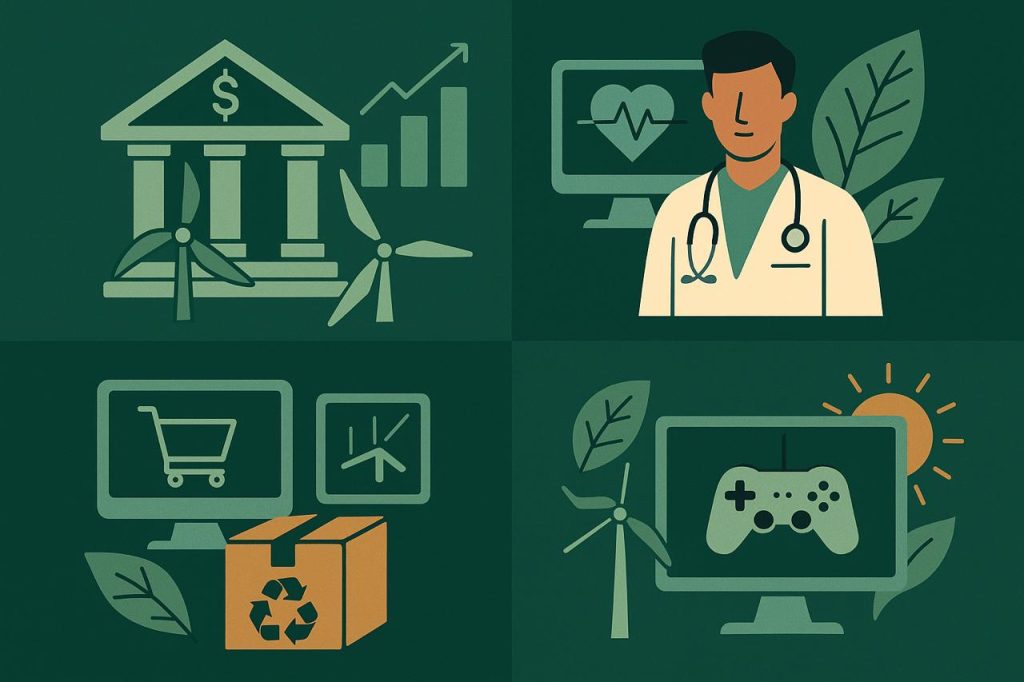
E-commerce
Retail giants handle millions of personalized recommendations, searches, and transactions every minute. These processes require immense computing power, often delivered by energy-hungry servers. In 2026, e-commerce leaders are rethinking personalization algorithms, balancing sustainability with customer experience. Recommendation engines are optimized to run during low-carbon hours or adjusted to reduce computational intensity without noticeably affecting results. The outcome is greener retail platforms that still deliver seamless shopping experiences.
Entertainment & Gaming
Streaming platforms and gaming studios face growing scrutiny over their energy use. A single HD streaming session or rendering pipeline can consume more electricity than expected, especially at scale. To address this, streaming services now dynamically adjust resolution based on both bandwidth and energy grid conditions. Game developers are redesigning rendering processes to reduce power-hungry computations, saving costs while reducing emissions. For users, this transition is almost invisible — yet its impact on global energy demand is profound.
Together, these industries showcase that sustainable computing is not theoretical. It is already operational, delivering efficiency, resilience, and measurable environmental benefits.
The Future of Sustainable Computing
The trajectory of sustainable computing points toward its adoption as a global standard, not just a competitive edge. By 2026, three forces are accelerating this evolution:
- Carbon as a Core KPI
Just as uptime and revenue are essential performance indicators, carbon will be measured at the software level. Enterprises will track and report the emissions of their applications, making sustainability an integral metric in quarterly reports. Customers, investors, and regulators will demand transparency — and businesses that fail to account for their digital carbon footprint risk reputational and financial penalties.
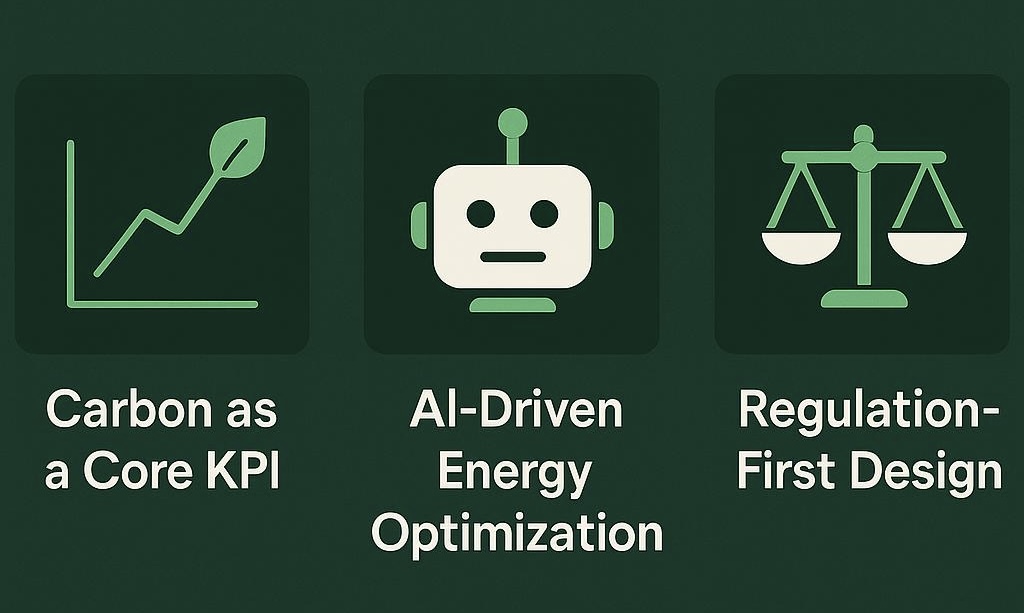
- AI-Driven Energy Optimization
Artificial intelligence is becoming the backbone of green IT. Intelligent systems are capable of predicting energy demand, routing workloads to greener energy sources, and even pausing non-critical processes when carbon intensity is high. These autonomous optimizations ensure businesses reduce their environmental impact without sacrificing speed or performance. In this way, AI transforms sustainability from a manual consideration into an automated advantage. - Regulation-First Design
Governments across the globe are tightening regulations around emissions, particularly in digital industries where growth is exponential. From carbon reporting mandates in finance to sustainability certifications in healthcare and retail, compliance is no longer optional. Software architectures will increasingly be designed with regulation in mind from day one, ensuring systems are future-proof against legal requirements and public expectations alike.
By embedding these forces into their strategies, companies are not only meeting regulatory and market demands but also securing their role in a future economy where sustainability equals long-term growth.
Conclusion
The future of computing is undeniably green. Sustainable, carbon-aware software represents the convergence of performance, innovation, and responsibility. Organizations no longer face a trade-off between profitability and sustainability — the two are intertwined. By aligning digital infrastructure with renewable energy, embedding carbon as a measurable KPI, and leveraging AI to optimize workloads, businesses unlock resilience in a world where climate action is both a moral and economic imperative.
The organizations that embrace this shift today will not only reduce risks but also set the standard for tomorrow’s digital economy. They will be the leaders shaping an era where growth and sustainability move hand in hand.
Why Ficus Technologies?
At Ficus Technologies, we help businesses merge innovation with sustainability.
Our teams:
- Design secure and carbon-aware software architectures.
- Integrate real-time carbon intensity data into workflows.
- Optimize cloud strategies for greener regions and lower emissions.
- Deliver products that comply with ESG standards and build trust with customers.
We don’t just build applications. We create digital solutions that are smart, scalable, and sustainable.
It refers to designing, deploying, and managing software in a way that minimizes energy consumption and carbon emissions, often by aligning workloads with renewable energy availability.
Traditional optimization focuses on speed and cost. Carbon-aware software adds a third metric — environmental impact — making scheduling, scaling, and resource allocation greener.
Finance, healthcare, e-commerce, and entertainment are leading adopters, but any industry with cloud operations or data-heavy processes can benefit.
Not necessarily. While there may be an upfront cost, energy efficiency usually lowers cloud bills and provides long-term savings alongside reputational benefits.





 Success...!