Blockchain technology continues to evolve beyond its origins in cryptocurrency. In 2026, organizations are increasingly using blockchain to build decentralized applications, manage digital assets, and create transparent, secure systems across industries.
However, one of the most important decisions when developing a blockchain-based product is choosing the right type of network. Public blockchains like Ethereum, Layer 2 scaling solutions, and private blockchain networks each offer different trade-offs in terms of scalability, cost, security, and control.
Selecting the wrong architecture can lead to performance issues, high operational costs, or limitations in product scalability. As a result, understanding the differences between these options is critical for building effective blockchain solutions.
Technology leaders planning decentralized applications.
Startup teams building blockchain-based products.
Developers and architects choosing blockchain infrastructure.
- Different blockchain architectures offer distinct trade-offs between decentralization, scalability, and control.
- Ethereum provides strong security and ecosystem support but can be costly and slower.
- Layer 2 solutions improve scalability and reduce costs, while private networks offer full control but less decentralization.
The Blockchain Landscape in 2026
The blockchain ecosystem has expanded significantly, moving beyond a single dominant platform to a multi-layered architecture.
Ethereum remains one of the most widely used platforms for decentralized applications due to its strong developer ecosystem and security model. At the same time, Layer 2 solutions such as rollups and sidechains are addressing scalability challenges by processing transactions off-chain while maintaining security guarantees.
Private and permissioned blockchains are also gaining traction among enterprises. These networks provide greater control over data, governance, and performance, making them suitable for internal systems and regulated industries.
As blockchain adoption grows, organizations must evaluate not only technical capabilities but also business requirements when selecting a platform.
Ethereum: Security and Ecosystem
Ethereum is the most established platform for building decentralized applications.
Its main advantages include a large developer community, extensive tooling, and strong security through decentralization. Smart contracts on Ethereum are widely supported, and many standards for tokens and decentralized finance originate from this ecosystem.
However, Ethereum also has limitations. Transaction fees can be high, especially during periods of network congestion. Throughput is relatively limited compared to centralized systems, which may affect performance for applications with high transaction volumes.
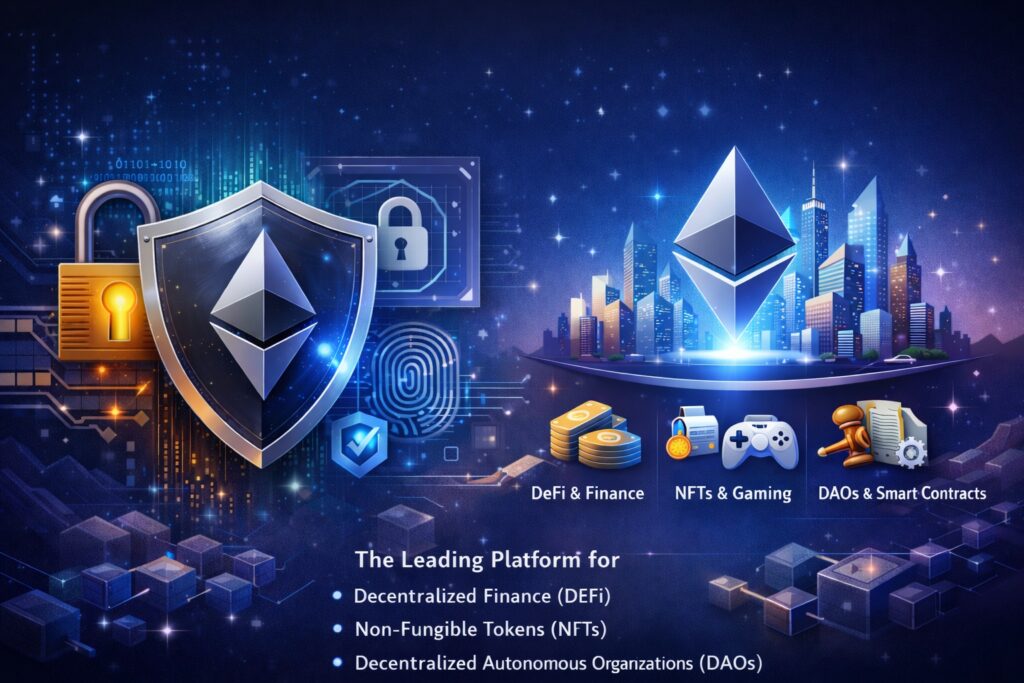
Ethereum is best suited for products that require strong security, transparency, and integration with existing decentralized ecosystems.
Layer 2 Solutions: Scalability and Cost Efficiency
Layer 2 solutions are designed to improve the scalability of blockchain networks.
Technologies such as rollups process transactions off-chain and then submit aggregated results to the main blockchain. This approach reduces transaction costs and increases throughput while maintaining a level of security derived from the underlying network.
Layer 2 platforms are particularly useful for applications that require high transaction volumes, such as payments, gaming, or large-scale decentralized applications.
However, they may introduce additional complexity in architecture and require careful consideration of security models and interoperability.
Private Blockchain Networks: Control and Customization
Private or permissioned blockchains are controlled by a single organization or a group of known participants.
These networks provide full control over governance, data access, and performance. Organizations can optimize transaction speed, enforce compliance requirements, and restrict access to authorized users.

Private blockchains are commonly used in enterprise applications such as supply chain management, financial systems, and internal data sharing platforms.
The trade-off is reduced decentralization and, in some cases, lower transparency compared to public networks.
Key Factors When Choosing a Blockchain
Selecting the right blockchain depends on several factors.
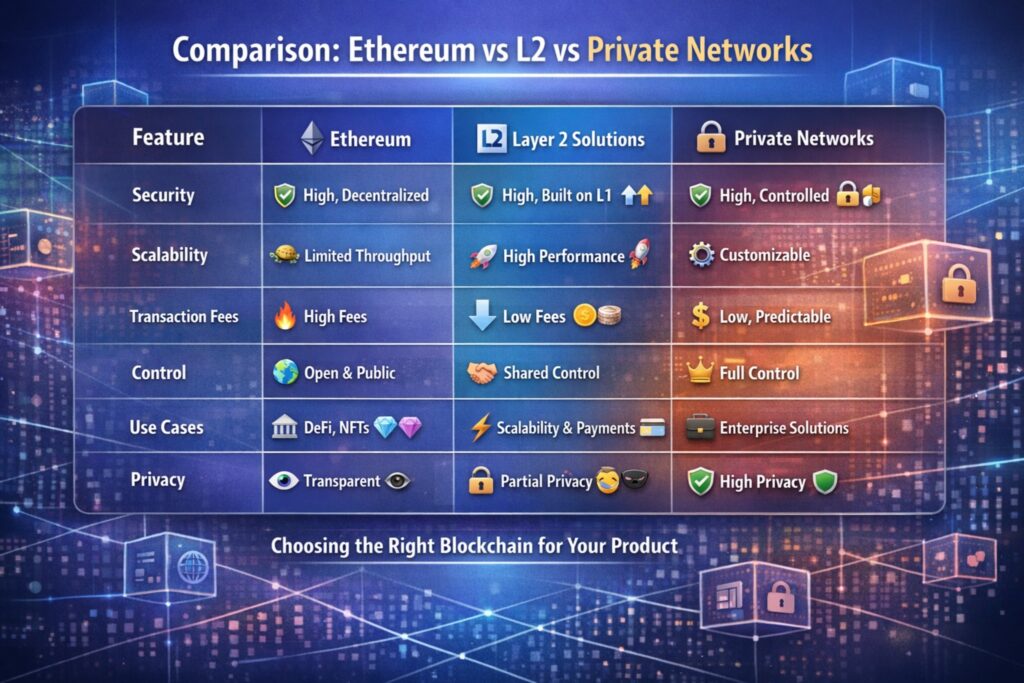
First, organizations must consider security requirements. Applications handling sensitive data or high-value transactions may benefit from highly decentralized networks.
Second, scalability and performance are critical for applications with large user bases or high transaction volumes.
Third, cost efficiency plays a major role. Transaction fees and infrastructure costs can significantly impact product viability.
Finally, control and governance determine whether a public, semi-public, or private network is the best fit.
Balancing these factors helps organizations choose the most appropriate architecture for their specific use case.
Conclusion
Choosing the right blockchain architecture is a critical step in building successful decentralized products.
Ethereum offers strong security and ecosystem support, Layer 2 solutions improve scalability and cost efficiency, and private networks provide control and customization.
Organizations must evaluate their specific requirements, including performance, cost, and governance, to select the most appropriate solution.
A well-chosen blockchain architecture enables scalable, secure, and efficient digital products.
Why Ficus Technologies?
Ficus Technologies helps organizations design and build blockchain-based solutions tailored to their business needs.
Our teams support companies in selecting the right blockchain architecture, implementing scalable systems, and integrating modern technologies into secure digital platforms.
By combining expertise in cloud infrastructure, DevOps, and blockchain development, we help organizations create efficient and future-ready digital solutions.
Ethereum is the main blockchain (Layer 1), while Layer 2 solutions process transactions off-chain to improve scalability and reduce costs.
Private blockchains are suitable for enterprise applications that require control, compliance, and restricted access.
Most Layer 2 solutions inherit security from the main blockchain, but their implementation details should be carefully evaluated.
It depends on the use case. Startups often choose Layer 2 for scalability or Ethereum for ecosystem access.




 Success...!