The way technology teams operate is evolving rapidly. Organizations are no longer defined solely by the tools they use but by how effectively their teams adapt to new technologies, collaborate across disciplines, and continuously develop technical capabilities.
Automation, artificial intelligence, and cloud-native platforms are reshaping how software is built and delivered. As a result, the skills required from technology professionals are changing just as quickly.
In 2026, companies face a new challenge: enabling teams to work effectively in complex, fast-moving technology environments while maintaining productivity, innovation, and collaboration.
Future-ready organizations invest not only in infrastructure and tools but also in the continuous development of technical skills and team enablement strategies.
HR and talent development teams working on technical workforce strategy.
Engineering managers leading distributed or cross-functional teams.
Organizations adapting to rapidly changing technology environments.
- The future of work in technology depends on continuous skill development and adaptable teams.
- Cross-disciplinary collaboration is becoming essential as engineering, data, and product teams work more closely together.
- Organizations must invest in learning frameworks, knowledge sharing, and internal enablement to support long-term innovation.
The Changing Nature of Technical Work
Over the past decade, the role of technology teams has expanded significantly. Engineers are no longer responsible only for writing code. They participate in system design, infrastructure management, security implementation, and data integration.
Cloud computing, DevOps practices, and platform engineering have blurred the boundaries between traditional roles such as developers, operations specialists, and infrastructure engineers.
At the same time, modern digital products require collaboration across multiple disciplines including product management, data science, cybersecurity, and user experience design.
This shift means that technical professionals must develop a broader understanding of systems, tools, and workflows beyond their core specialization.
Organizations that support this kind of multidisciplinary collaboration are better positioned to deliver scalable and resilient digital platforms.
Why Skills Development Is a Strategic Priority
Technology evolves faster than most traditional training programs can keep up with. New frameworks, programming languages, cloud services, and security practices appear constantly.
For companies, this creates a growing skills gap. Teams must maintain existing systems while simultaneously adopting new technologies.
Continuous learning therefore becomes a strategic requirement rather than a one-time training initiative.
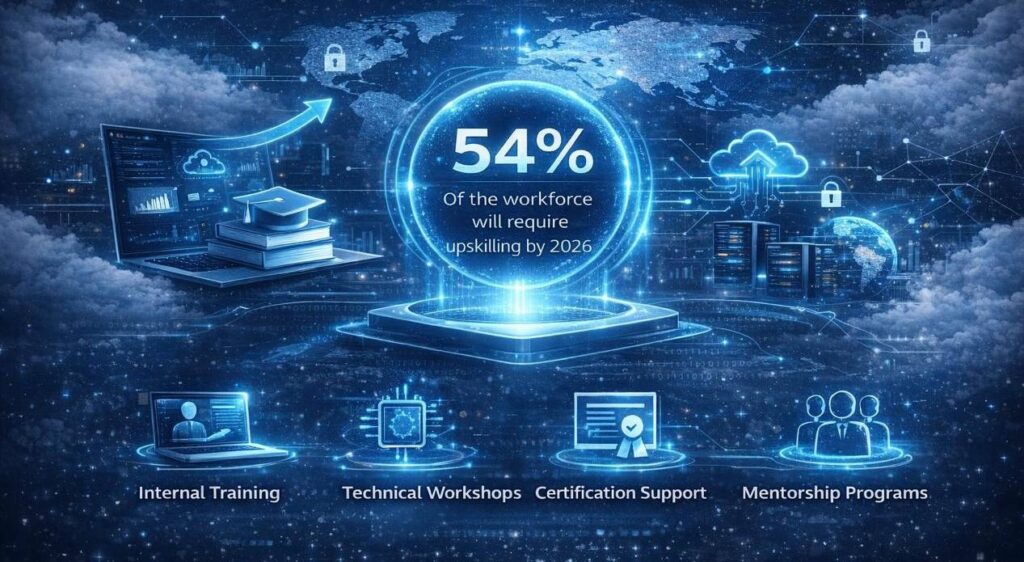
Organizations increasingly invest in internal learning programs, technical workshops, mentorship structures, and certification initiatives to ensure that teams remain capable of working with modern technology stacks.
Developing internal expertise not only improves technical performance but also increases employee engagement and retention.
Key Statistics Shaping the Future of Work
Several industry reports highlight how quickly the technology workforce and skill requirements are evolving. Organizations are facing growing pressure to upskill employees, adopt automation, and adapt to distributed work environments.
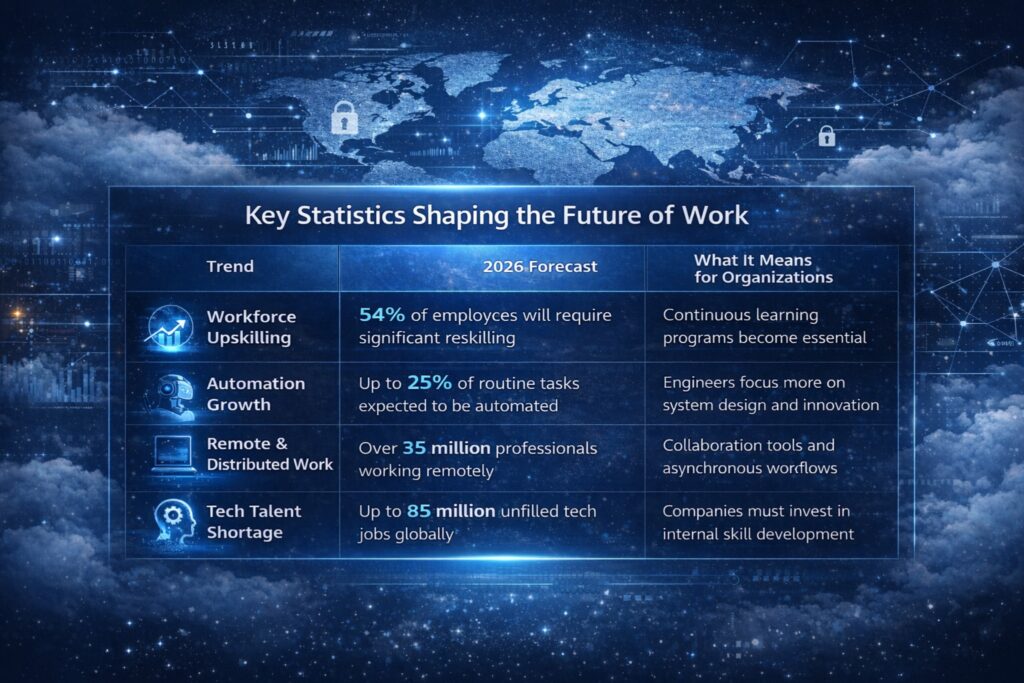
Research from global consulting firms and technology organizations shows that the demand for digital skills will continue to accelerate over the next few years. Companies that invest in workforce development and technical enablement are more likely to remain competitive in increasingly complex digital ecosystems.
The Role of Team Enablement
Team enablement focuses on providing engineers and technical specialists with the tools, knowledge, and processes needed to work effectively.
Rather than expecting every developer to manage infrastructure, security policies, and deployment pipelines individually, many organizations create platform engineering teams responsible for building internal development platforms.
These platforms provide standardized tools for code deployment, monitoring, security, and infrastructure management.
By reducing operational complexity, platform teams allow developers to focus more on building product features and solving business problems.
Team enablement also includes documentation frameworks, knowledge-sharing systems, and internal support structures that help teams collaborate efficiently.
Collaboration in Distributed Teams
The future of work is increasingly distributed. Many technology organizations operate with teams located across multiple countries and time zones.
While distributed work expands access to global talent, it also requires new approaches to communication and coordination.
Successful distributed teams rely on clear documentation, well-defined development workflows, and asynchronous communication practices.
Modern collaboration platforms support these processes by integrating project management, version control, and communication tools.
Organizations that establish structured collaboration frameworks can maintain productivity and alignment even when teams operate across different locations.
Build high-performing tech teams for modern digital environments.
Contact usBalancing Automation and Human Expertise
Automation is transforming how technology teams operate. Continuous integration pipelines, automated testing frameworks, and infrastructure-as-code tools reduce the manual work required to build and deploy software.
However, automation does not eliminate the need for skilled engineers. Instead, it changes the type of expertise required.
Engineers must understand system architecture, reliability engineering, and security practices in order to design automated systems that function reliably at scale.
Human expertise remains essential for strategic decision-making, system design, and problem-solving in complex technology environments.
The future of work therefore combines automation with continuous human learning and technical expertise.
Conclusion
The future of work in technology is defined not only by new tools but also by how effectively teams adapt to change.
Organizations that invest in skills development, team enablement, and collaborative engineering practices are better prepared to manage increasingly complex digital environments.
By supporting continuous learning and creating systems that enable teams to work efficiently, companies can build resilient technology organizations capable of sustaining long-term innovation.
Why Ficus Technologies?
Ficus Technologies helps organizations build high-performing technology teams capable of operating in modern digital environments.
Our experts support companies in implementing scalable engineering practices, cloud infrastructure, and collaborative development frameworks. By combining technical expertise with effective team enablement strategies, organizations can accelerate innovation while maintaining operational efficiency.
Through platform engineering, DevOps practices, and technical consulting, Ficus Technologies helps teams develop the skills and infrastructure needed to succeed in the evolving technology landscape.
Team enablement refers to providing developers and technical specialists with tools, platforms, documentation, and support structures that help them work more efficiently.
Rapid advancements in cloud computing, automation, AI, and cybersecurity continuously reshape the tools and knowledge required in modern technology environments.
Organizations typically implement internal training programs, mentorship systems, technical workshops, and certification support.
Digital platforms often require expertise from multiple disciplines, making collaboration between engineering, data, product, and design teams essential.





 Success...!