
Remote and hybrid work models have transformed how organizations operate. Teams now collaborate across different locations, time zones, and digital platforms, relying heavily on cloud infrastructure, communication tools, and shared digital environments.
While this flexibility offers significant advantages, it also introduces new challenges related to security, transparency, and collaboration. Employees must trust that digital systems are secure, communication channels are reliable, and data remains protected across distributed environments.
In 2026, building digital trust has become one of the most important priorities for organizations managing remote teams. Companies must ensure that their technology infrastructure, security practices, and organizational processes support a secure and transparent digital workplace.
Digital trust is no longer just about cybersecurity. It also involves reliable collaboration systems, clear governance policies, and tools that enable employees to work confidently in distributed environments.
IT and security professionals responsible for digital workplace infrastructure.
HR and operations leaders supporting remote work environments.
Organizations adopting hybrid or remote-first work models.
- Remote work environments require strong digital trust built on security, transparency, and reliable technology.
- Identity management, secure collaboration platforms, and clear governance policies are essential for protecting distributed teams.
- Organizations must combine cybersecurity practices with effective communication tools and digital infrastructure to support remote work.
The Growth of Remote Work
Remote work adoption has accelerated significantly over the past few years. Advances in cloud computing, collaboration platforms, and digital infrastructure have made it possible for organizations to operate effectively without centralized offices.
Technology companies, digital service providers, and global organizations increasingly rely on distributed teams to access talent from different regions. Employees can collaborate using video conferencing tools, project management platforms, and shared cloud environments.
However, this shift also introduces new operational and security complexities. Employees often access corporate systems from different networks, personal devices, or unsecured environments. Without proper controls, these conditions may increase exposure to security risks.
To address these challenges, organizations must build digital environments that employees can trust.
Why Digital Trust Matters
Digital trust plays a central role in the productivity and security of remote teams. Employees must feel confident that communication channels, data platforms, and internal systems are reliable and secure.
When digital trust is weak, organizations may experience reduced collaboration, increased security incidents, and lower employee confidence in digital tools.
Building trust requires transparency in how systems operate. Employees need clear guidelines about how data is managed, how communication tools should be used, and how security practices protect their work environments.
Organizations that prioritize digital trust often see stronger collaboration, improved productivity, and greater resilience against cyber threats.
Key Statistics on Remote Work and Digital Trust
The expansion of remote and hybrid work has significantly changed how organizations approach security and collaboration. Distributed teams rely on digital infrastructure, cloud platforms, and online communication tools to perform daily operations.
According to recent industry reports, more than 60% of employees now work remotely at least part of the time, reflecting the continued growth of hybrid work environments. As organizations become more distributed, trust in digital systems becomes essential for maintaining productivity and collaboration.
Security concerns have also increased alongside remote work adoption. Studies indicate that over 70% of organizations report higher levels of phishing and credential-based attacks in remote environments, largely due to employees accessing corporate systems from multiple devices and networks.
Collaboration technology plays a key role in building digital trust. Surveys show that around 80% of technology leaders consider digital collaboration platforms critical for maintaining transparency and coordination within distributed teams.
Identity verification is another important component. Experts estimate that over 90% of organizations now prioritize identity and access management as a core security strategy for remote work environments.
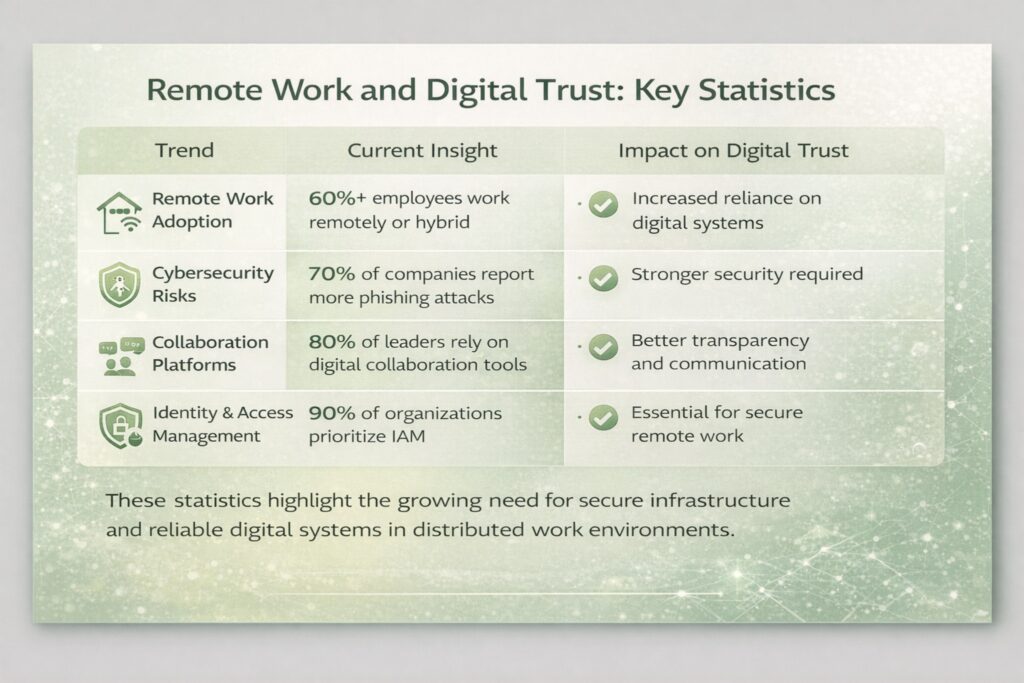
These statistics highlight the growing importance of secure infrastructure, transparent communication tools, and strong access control systems in building digital trust for remote teams.
Technologies That Support Digital Trust
Several technologies help organizations maintain secure and reliable remote work environments.
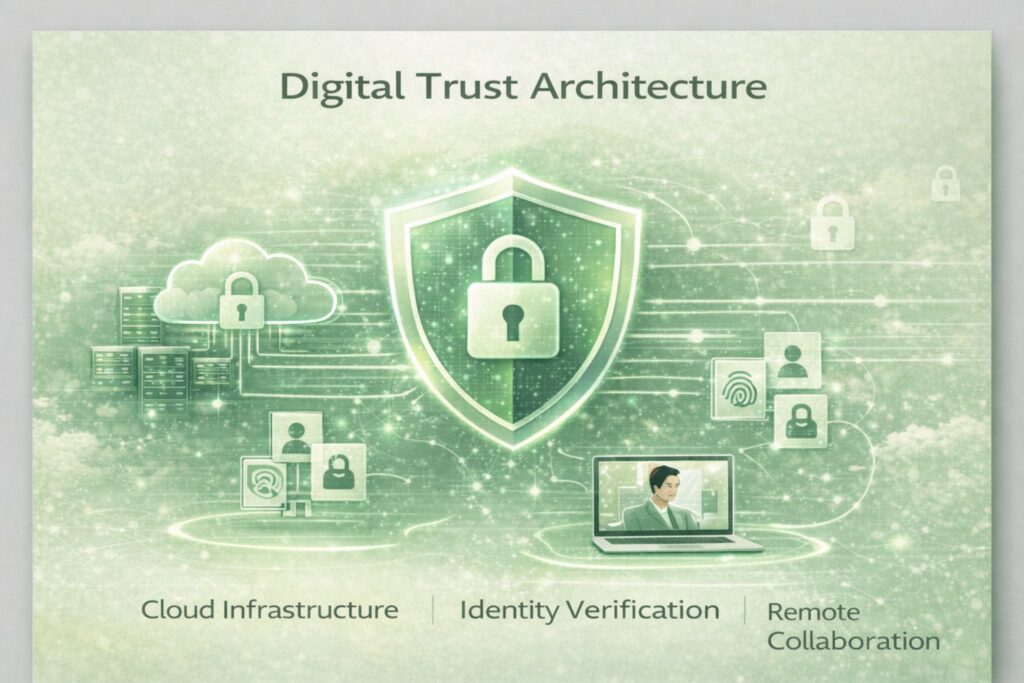
Identity and access management systems ensure that only authorized users can access sensitive platforms and data. Multi-factor authentication and device verification add additional layers of protection.
Secure cloud infrastructure allows organizations to store and manage data safely while supporting distributed collaboration. Modern cloud platforms also provide monitoring tools that detect suspicious activity and unauthorized access attempts.
Collaboration tools such as shared document platforms, communication applications, and project management systems help teams maintain transparency and alignment across locations.
Together, these technologies create the foundation for secure digital workplaces.

Build secure digital infrastructure for safe and reliable remote collaboration!
Contact usBuilding a Culture of Digital Responsibility
Technology alone cannot guarantee digital trust. Organizational culture and employee awareness are equally important.
Employees must understand how to protect sensitive data, recognize phishing attempts, and follow secure communication practices. Training programs and clear security guidelines help reinforce responsible digital behavior.
Leadership also plays a role in promoting transparency and accountability. When organizations clearly communicate security policies and digital governance practices, employees are more likely to trust the systems they use.
A culture that combines technology, awareness, and accountability is essential for sustaining digital trust.
Conclusion
Remote work is now a permanent component of modern business operations. As organizations continue to operate across distributed environments, digital trust becomes a critical factor in maintaining productivity, collaboration, and security.
Companies must combine secure infrastructure, strong identity management, and reliable collaboration tools to create environments where employees can work confidently.
By investing in both technology and organizational practices, organizations can build digital workplaces that support remote teams while maintaining security and trust.
Why Ficus Technologies?
Ficus Technologies helps organizations design secure digital infrastructures that support distributed teams and modern collaboration environments.
Our experts assist companies in implementing cloud platforms, secure communication systems, and identity management frameworks that strengthen digital trust across remote teams.
By combining modern DevOps practices, cloud architecture expertise, and cybersecurity strategies, Ficus Technologies helps organizations build resilient digital workplaces.
Digital trust refers to the confidence employees and organizations have in the security, reliability, and transparency of digital systems used for remote collaboration.
Digital trust ensures that employees can collaborate safely, share information securely, and rely on digital tools without compromising security.
Identity management systems, secure cloud infrastructure, collaboration platforms, and monitoring tools help organizations maintain digital trust.
Organizations can strengthen digital trust by combining strong cybersecurity practices, reliable collaboration tools, employee training, and transparent governance policies.





 Success...!