Technology in 2026 is shaped by artificial intelligence, cloud-native platforms, and immersive digital experiences. With dozens of programming languages available, choosing where to invest your time can feel overwhelming. The truth is, not all languages are equally valuable for the future.
Here are the top three programming languages in 2026 that every developer should prioritize to stay relevant, competitive, and future-ready.
CTOs, Product Owners & Startup Founders evaluating which technologies to prioritize for their teams.
Students & Career Switchers deciding which languages will offer the highest ROI in learning.
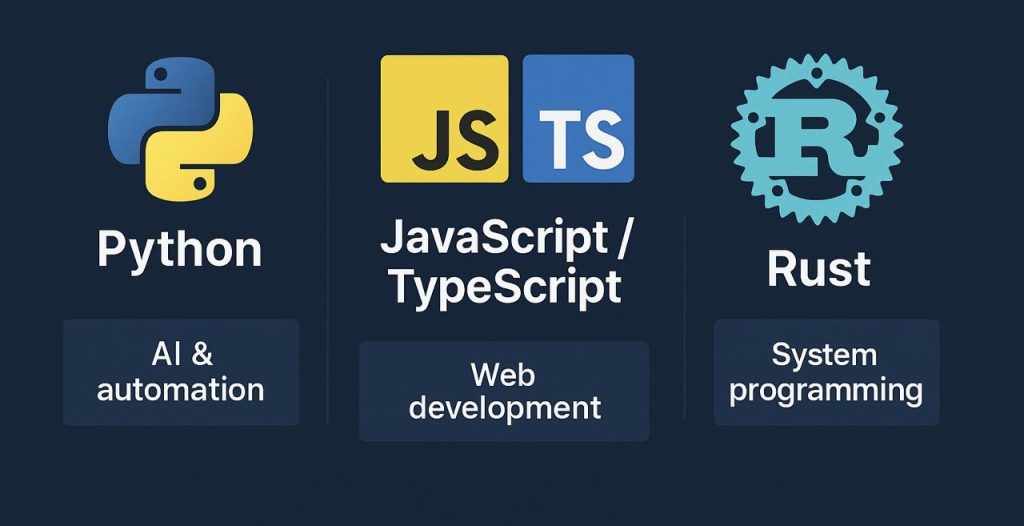
- Python is the universal entry to AI and automation.
- JavaScript/TypeScript remain essential for scalable user experiences.
- Rust is the fastest-growing language for secure, high-performance systems.
Top three programming languages in 2026
- Python – The AI Powerhouse
Python remains the undisputed leader for artificial intelligence, machine learning, and data science. Its simplicity, vast ecosystem, and dominance in AI frameworks like TensorFlow, PyTorch, and scikit-learn make it the first choice for developers.
In 2026, Python goes beyond AI — it powers automation in finance, cybersecurity workflows, and scientific research. If you want to work in AI-driven industries, Python is your ticket.
- JavaScript / TypeScript – The Web’s Backbone
The web is not going anywhere, and neither is JavaScript. Combined with TypeScript, it has become the standard for building scalable, maintainable web applications. From e-commerce platforms to AR/VR-powered metaverse experiences, these languages fuel interactive, global-scale applications.
In 2026, TypeScript ensures large projects are reliable and bug-resistant, while JavaScript guarantees universal reach across browsers and devices. Together, they form the foundation of the digital user experience.
- Rust – Security and Performance for the Future
If Python is about intelligence and JavaScript is about experience, Rust is about trust. Known for memory safety and blazing performance, Rust has moved from niche to mainstream. It now powers secure systems in finance, blockchain, IoT, and even government infrastructure.
By 2026, companies increasingly turn to Rust for mission-critical applications where errors are not an option. Learning Rust positions you at the cutting edge of cybersecurity, performance engineering, and next-gen infrastructure.
Emerging Trend: Multi-Language Developers
In 2026, the most valuable developers aren’t those who master just one programming language — they are multi-language professionals who can adapt to different project needs and ecosystems.
Modern software solutions rarely live within a single tech stack. A fintech platform, for example, might rely on Python or machine learning models, JavaScript/TypeScript for the web interface, and Rust or Go for high-performance transaction processing. Developers who can navigate seamlessly between these languages reduce bottlenecks, accelerate delivery, and make teams more resilient.
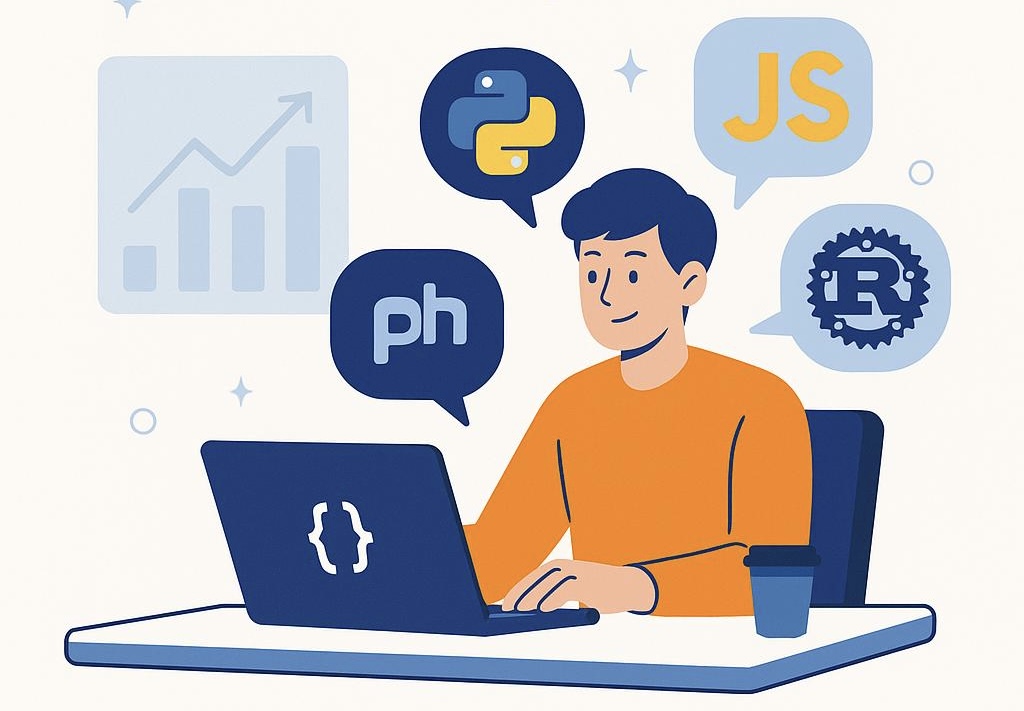
The rise of polyglot programming also reflects the demand for cross-functional teams.
Employers increasingly look for engineers who can:
- Switch contexts quickly — moving from frontend fixes to backend optimizations.
- Collaborate effectively — speaking the “language” of each specialist on the team.
- Design with flexibility — selecting the best tool for the problem instead of forcing a one-size-fits-all approach.
Recruiters report that multi-language developers command 15–25% higher salaries than single-stack specialists in 2026, especially in startups and innovation-driven enterprises. Their adaptability makes them indispensable in environments where technology evolves rapidly, and projects pivot often.
This trend is not about abandoning specialization but about building a hybrid skill set. Being proficient in at least one foundational language (like Python or JavaScript) and one emerging systems language (like Rust or Go) positions developers at the cutting edge of the industry.
In short, the future belongs to developers who think like engineers, act like problem-solvers, and code like linguists.

Want to excel in coding with in-demand languages like TypeScript or Python?
Contact UsConclusion
While many languages have their place, Python, JavaScript/TypeScript, and Rust stand out as the top three for 2026. They cover the most critical areas of modern technology: intelligence, experience, and security.
Master these, and you’re not just keeping up — you’re building the future.
Why Ficus Technologies?
Choosing the right programming languages is only half the challenge — knowing how to apply them in real-world projects is the other. At Ficus Technologies, we don’t just code; we design, scale, and optimize solutions that align with business goals.
Our advantages:
- Cross-Stack Expertise → Teams skilled in Python, JS/TS, Rust, Go, and beyond.
- Industry-Specific Experience → From fintech and logistics to healthcare and SaaS.
- Future-Proof Architecture → Secure, cloud-native systems built for scalability.
- AI + Cloud Integration → Practical experience embedding AI into enterprise-grade products.
With over a decade of expertise, 70%+ senior engineers, and proven results across industries, Ficus Technologies helps businesses not just choose the right technology stack — but maximize its impact.
Python remains the most versatile and future-proof, thanks to its dominance in AI, machine learning, and data analytics, as well as its huge developer community and libraries.
Absolutely. With frameworks like React, Next.js, and the continuous growth of web and mobile applications, JavaScript (and TypeScript) are still critical for front-end and full-stack developers.
Java and C# continue to dominate enterprise ecosystems due to stability, scalability, and long-term corporate investment.
Yes. Rust is growing rapidly in systems programming, blockchain, and security-driven applications, while Go is the go-to choice for cloud infrastructure and microservices.
In 2026, being a multi-language developer is a competitive advantage. Employers value engineers who can switch between Python, JavaScript, and cloud-native languages depending on project needs.


 Success...!