How one e-commerce business addressed accessibility concerns on an existing website while keeping the project moving.
In August 2026, a Ficus Technologies client received a demand letter alleging accessibility barriers on its website. The business was already improving software inherited from earlier contractors, and the letter brought a new, time-sensitive priority to an active development relationship. This article looks at how the team approached the technical work and what other businesses can learn from that process.
An existing platform, not a clean slate
Ficus began working with the client in 2024 after an introduction from an SEO specialist. Earlier contractors had built the client’s projects, including an e-commerce platform using Laravel and Nuxt. The systems had bugs and important functions that did not work as expected before Ficus became involved.
The initial engagement focused on stabilizing the online store. As the team repaired critical functionality, the client brought additional projects to Ficus. Ficus recommended a full rebuild as the cleaner long-term technical option, but the client’s budget called for a phased approach: repair the most pressing issues, keep the products running, and improve them over time.
That context matters. Accessibility work on an established website cannot be planned as though the team is starting from a blank page. Changes have to fit the existing codebase, business priorities, and live user journeys.
Understanding the letter and setting priorities
The demand letter was dated August 24, 2026, and included a draft complaint. It stated a 21-day response period, placing the approximate deadline around September 14. An attached draft complaint does not, by itself, show that a lawsuit has been filed. The document called for legal review by the client’s advisers and technical investigation by the development team.
After the client shared the materials, Ficus reviewed the accessibility concerns and prepared a remediation plan. The team agreed on the scope with the client before implementation began. That sequence helped turn a broad, urgent request into work the team could prioritize and deliver within an operating website.
What the team changed
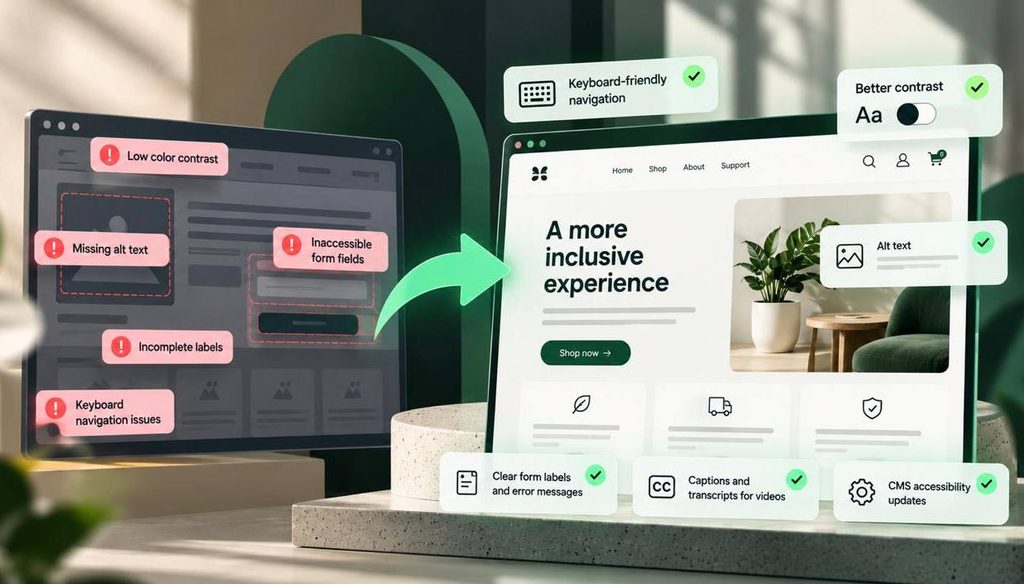
The remediation covered more than a single page or visual adjustment. In broad terms, the work included:
Keyboard access and orientation: improving keyboard operation, visible focus, navigation menus, dialogs, and other interactive controls.
Forms and content: improving field labels, error messages, image descriptions, links, and support for captions and transcripts in video content.
Readability and structure: improving contrast in affected areas and refining page structure and accessibility information.
Some changes also required updates to the content management tools so accessible video details could be added to articles.
Ficus completed the agreed development work ahead of its planned schedule, leaving time for further testing and possible refinements. The website is operating normally following the work.
What businesses can take from this experience
A demand letter creates urgency, but a useful response still needs clear roles and a workable technical plan. The client’s advisers handle the legal questions; the product team investigates the reported barriers and agrees on the development scope. Keeping those responsibilities clear helps avoid treating a code change as a legal conclusion.
On an inherited platform, accessibility issues can cut across interaction, content, design, and the systems used to publish that content. A practical plan should therefore look beyond the first visible problem and identify which user journeys and shared components need attention. The work should also leave time for review after implementation.
Finally, the decision between incremental improvement and a full rebuild is a business decision as well as a technical one. This client chose phased repairs because of budget constraints. That approach allowed the team to address the accessibility concerns within a longer effort to stabilize existing products.
Accessibility is part of maintaining a dependable digital service. When a time-sensitive concern arises, a team that understands the existing system can turn it into scoped work, deliver improvements, and keep the website in operation.
Concerned about accessibility on your website?
Contact Us
Our team can review your site, identify barriers, and help plan and implement practical improvements before accessibility issues become urgent.







 Success...!